Where Everyone Has a Library Card: The Small American Towns That Made Reading Their Whole Thing
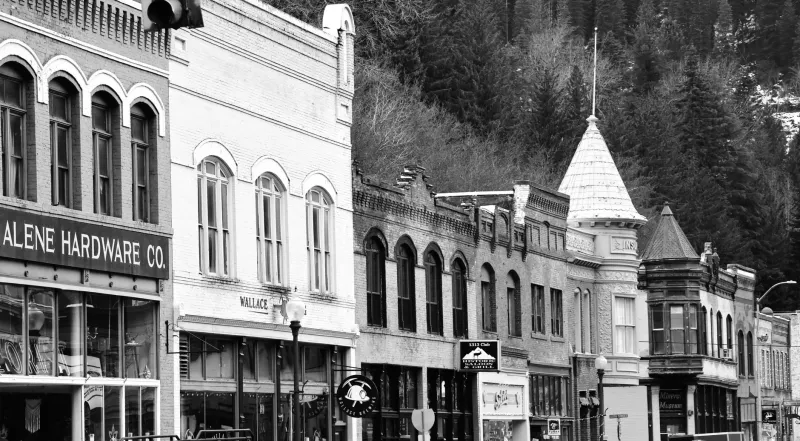
Most towns are defined by geography, industry, or history. There's the coal town, the college town, the town that used to have a factory. And then there are the towns that looked around one day and decided — collectively, stubbornly, joyfully — that their thing was going to be books.
Not in a bumper sticker way. Not in the "we have a Little Free Library outside the post office" way. In the full, committed, let's-elect-a-poet-as-mayor, let's-close-Main-Street-for-a-literary-festival, let's-make-sure-every-kid-in-this-town-goes-home-with-something-to-read way.
These places exist. And spending time with their stories is a good reminder of what a community can actually become when it decides that reading is the thing it does best.
Archer City, Texas: The Town That Bet Everything on Books
You wouldn't expect the Texas panhandle to be the setting for one of America's great book towns. But Archer City — population somewhere around 1,700, flat horizon in every direction — became something of a literary pilgrimage site largely because of one man and one obsession.
Larry McMurtry, the Pulitzer Prize-winning novelist behind Lonesome Dove, spent decades quietly filling the buildings of his hometown with used books. At its peak, Booked Up — McMurtry's sprawling, legendary used bookstore — occupied four buildings and held somewhere north of 300,000 volumes. Scholars, collectors, and devoted readers made the drive from Dallas, from Houston, from out of state, just to spend a few hours in those rooms.
McMurtry passed away in 2021, and the store has significantly downsized since its heyday. But what Archer City represents hasn't faded. It's proof that a single person's devotion to books can reshape the identity of an entire community. The town's relationship with literature became part of its DNA — it shows up in local pride, in how residents talk about where they're from, in the particular kind of traveler who still makes the trip.
There's something moving about that. A small Texas town that the world might have forgotten, remembered instead because of the weight of all those shelved pages.
Fairhope, Alabama: Where the Literary Life Is Just Regular Life
Fairhope sits on the eastern shore of Mobile Bay, and it has the kind of unhurried beauty that makes you want to slow down and read something long. Which, apparently, is exactly what a lot of people have been doing there for over a century.
The town was founded in 1894 as a utopian single-tax colony — an experiment in cooperative living that attracted artists, writers, and free thinkers from the start. That early culture of intellectual openness never really left. Today, Fairhope has a bookstore per capita ratio that puts most cities to shame. Page and Palette, the beloved independent bookstore at the heart of town, has been a community anchor for decades — hosting author events, children's reading programs, and the kind of regular foot traffic that most indie booksellers can only dream about.
The town has produced and attracted writers throughout its history, and the literary festival circuit knows Fairhope well. But what makes it genuinely remarkable isn't any single event or institution. It's the texture of daily life there. Residents talk about books the way people in other towns talk about sports. The library is a point of civic pride. Kids grow up assuming that reading is just something people do — because in Fairhope, it is.
That cultural assumption matters more than it might seem. When reading is treated as ordinary and essential rather than virtuous and exceptional, something shifts in how communities relate to knowledge, to each other, and to the world outside their borders.
Litchfield, Connecticut: Small Town, Serious Literary Pedigree
Litchfield is the kind of New England town that looks like it was designed by someone who read too many novels about New England towns. White church steeple, village green, old colonial houses tucked behind stone walls. It's beautiful in a way that feels almost literary by default.
But Litchfield has earned its bookish reputation through something more than aesthetics. The town has deep historical roots in American letters — it was home to Harriet Beecher Stowe, whose Uncle Tom's Cabin remains one of the most politically consequential novels ever written in this country. That legacy doesn't just sit in a museum. It lives in the town's sense of itself.
The Litchfield Jazz Festival draws national attention, but it's the quieter literary programming — the reading series, the author visits, the library events that fill rooms on weeknight evenings — that gives the town its particular character. There's a sense that the written word is taken seriously here, not as a hobby but as a civic value.
Local booksellers in towns like Litchfield will tell you the same thing: their customers aren't just buying books. They're maintaining a relationship with the act of reading itself, and they want to do it in community. The store is part of that community. So is the library, the school, the neighbor who leaves a stack of recommendations on your porch.
What These Towns Are Actually Telling Us
There's a temptation to romanticize places like Archer City, Fairhope, and Litchfield — to treat them as charming exceptions in a world that's moved on from the page. But that reading misses the point entirely.
These communities aren't clinging to books out of nostalgia. They're investing in them because they've seen what happens when a shared relationship with reading becomes part of a town's identity. People talk to each other more. They understand each other better. They fight for their libraries and their bookstores the way other towns fight for their stadiums, because they know what those spaces actually provide.
Reading, when it becomes a collective act rather than a solitary one, builds something that's hard to name but easy to feel. It's the thing that makes a town feel like it has a soul.
If you've never made a literary road trip across America, these towns are a pretty good reason to start planning one. Bring a tote bag. You won't leave empty-handed.