Ink in the Margins: The Passionate, Polarizing World of Readers Who Write Back
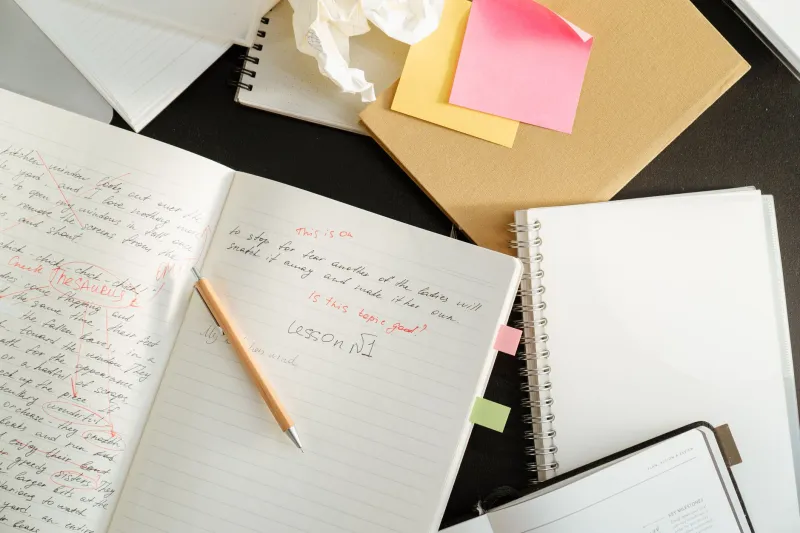
There's a particular kind of reader you've probably met. Maybe they're at your book club, casually flipping to a page that's so thoroughly marked up it looks like a conversation happened inside it. Pencil underlines, asterisks, tiny exclamation points, whole paragraphs of cramped handwriting squeezed into the gutter of the page. They look up and say, "Oh, I just like to interact with what I'm reading."
For millions of Americans, that interaction is the whole point.
Annotation — the practice of writing directly in, on, and around the text of a book — has been quietly gaining momentum as a cultural habit. TikTok's #annotating tag has racked up hundreds of millions of views. Stationery brands are selling "annotation kits" complete with color-coded tabs and fine-liner pens. And in university libraries and rare book rooms across the country, scholars are increasingly treating the handwritten notes left by previous readers not as damage, but as data.
So what exactly is going on when someone picks up a pen and talks back to a book?
More Than a Highlighter Habit
Let's be honest: not all annotation is created equal. There's a spectrum. On one end, you have the casual underliner — someone who drags a highlighter under a sentence that moved them and moves on. On the other, you have what some in the reading community call "deep annotators": readers who treat the white space of a page as a dialogue partner, recording not just what they noticed but why, what it reminded them of, where they disagree, and what questions the text refused to answer.
Psychologists who study reading comprehension have a term for this kind of engaged processing: elaborative interrogation. Essentially, when you force yourself to respond to a text — even just by scrawling a question mark next to a confusing passage — you're building a richer mental model of the material. You're not just absorbing; you're constructing.
"Writing in a book makes you a participant rather than a spectator," says one literary studies professor at a mid-Atlantic university who has spent years researching reader response. "There's something almost confrontational about it, in the best possible way. You're refusing to be passive."
For many dedicated annotators, that refusal feels deeply personal. Some readers use color systems — blue for beautiful language, red for things they disagree with, green for ideas they want to follow up on. Others write letters to the author in the margins. Some simply record the date and their emotional state when they read a particular passage, turning their books into a kind of accidental diary.
The Great Debate: Devotion or Desecration?
Not everyone is charmed by this. Ask any librarian, and you'll get a complicated answer.
"My gut reaction when I see a marked-up library book is frustration," admits a public librarian based in Chicago who has worked in circulation for over fifteen years. "That book belongs to everyone. When you write in it, you're inserting yourself into someone else's reading experience whether they want you there or not."
That tension sits at the heart of the annotation debate. A personally owned book is one thing — do whatever you want to it, and frankly, good for you. But the ethics shift when the book is borrowed, shared, or rare.
Rare book collectors and archivists, interestingly, often land in a more nuanced place. Many of the most celebrated marginalia in literary history — from John Adams's combative annotations in his personal library to Mark Twain's sarcastic commentary scrawled through the books he read — are now considered invaluable primary sources. They reveal not just what a famous mind thought about a specific text, but how that mind worked.
"Marginalia is basically a reader's fingerprint," explains a rare books curator at a northeastern university. "When we find a heavily annotated copy of, say, an 18th-century pamphlet, we can sometimes trace the intellectual lineage of an idea. We can see where a reader pushed back, where they were persuaded, where they were confused. It's history happening in real time."
In that light, even the most casual margin-scribbler is participating in a tradition that goes back centuries. Medieval monks annotated manuscripts. Renaissance scholars covered their books in commentary. Samuel Taylor Coleridge was so prolific a margin-writer that his annotations were eventually collected and published as their own volume.
What Your Annotations Say About You
Here's where it gets genuinely interesting: annotation as a form of self-knowledge.
Several therapists and reading wellness practitioners in the US have started incorporating annotated reading into their work with clients — not as a study technique, but as a tool for reflection. The idea is straightforward: the things you mark in a book are rarely random. They tend to cluster around themes that matter to you personally, often ones you haven't consciously identified.
Go back through an old annotated book and read only your notes. You'll often find a portrait of who you were when you read it — what you feared, what you wanted, what you were working through. It's less like re-reading a book and more like reading a letter you forgot you wrote to yourself.
That's a compelling argument for annotation as a wellness practice, and it lines up with a broader cultural shift toward reading as something more than entertainment — as a mode of self-examination and emotional processing.
Taking Hold of the Text
Ultimately, what the annotation subculture is really about is ownership — not legal ownership, but intellectual and emotional ownership of an experience. When you write in a book, you are claiming it. You are saying: I was here. I read this. It meant something to me, and here is what.
There's something quietly radical about that in an age of algorithmic content and passive scrolling. A marked-up book is evidence of a mind that showed up fully, that refused to just consume and move on.
So whether you're a devoted margin-writer with a color-coded system, or someone who's only ever dog-eared a page and felt vaguely guilty about it — consider this your invitation. Pick up a pen. Talk back. The book can take it.