More Than a Bookstore: The Indie Shops Quietly Holding American Communities Together
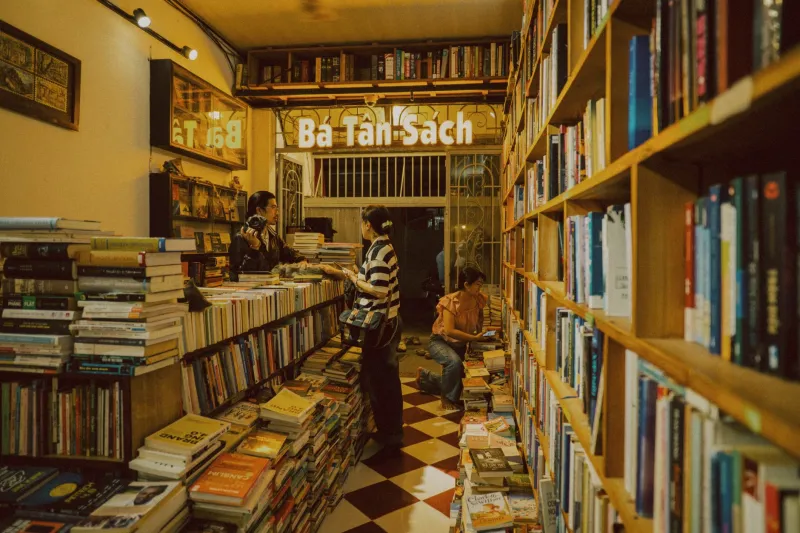
Walk into the right independent bookstore on the right night and you might stumble into something you didn't expect. A circle of folding chairs. A facilitator with a dog-eared novel. A group of people — some of them strangers, some of them neighbors who've lived three blocks apart for years without really knowing each other — talking about a book in a way that's clearly about something much bigger than the book.
This is what's happening in indie bookstores across America right now. And it's worth paying attention to.
The Numbers Tell One Story. The Communities Tell Another.
The comeback of independent bookselling is, at this point, a well-documented phenomenon. The American Booksellers Association has reported consistent growth in indie bookstore membership over the past decade, a counter-intuitive surge that flew in the face of every prediction the rise of Amazon was supposed to guarantee. Between 2009 and the early 2020s, the number of independent bookstores in the US roughly doubled.
But the raw numbers don't capture what's actually driving that resilience. The stores that are thriving aren't just selling books — they're selling belonging. They've become what sociologists call "third places": spaces that are neither home nor work, where community actually forms. In an era when Americans report record levels of loneliness and social disconnection, that turns out to be an extraordinarily valuable thing to offer.
Loyalty Bookstore, Washington D.C. and Silver Spring, Maryland
When Hannah Oliver Depp opened Loyalty Bookstore in Washington D.C. in 2018 (later adding a location in Silver Spring, Maryland), the explicit goal was to create a store that centered communities who had long felt like afterthoughts in literary spaces — specifically LGBTQ+ readers and readers of color.
What emerged was something that regularly surprises even its most loyal customers. Loyalty doesn't just stock books by and for underrepresented readers — it actively builds programming around those communities' specific needs. That has included everything from book clubs for queer teens to events specifically designed for Black readers navigating grief and mental health, where the books on the table aren't decorative but genuinely central to the conversation.
"A bookstore is only as good as its relationship to the people around it," Depp has said in various interviews. That philosophy is visible in every corner of the store — in the curation, in the staff recommendations, in the way events are structured to feel less like author appearances and more like community gatherings.
For readers in the D.C. metro area, Loyalty has become a kind of anchor point. For readers everywhere else, it's a model of what a bookstore can be when it takes its community seriously.
Epilogue Books, Chocolate & More — Chapel Hill, North Carolina
The name alone tells you something about this store's approach. Epilogue Books, Chocolate & More in Chapel Hill is part bookshop, part chocolate shop, and — increasingly — part community hub for a town navigating the tensions between its university identity and the needs of longtime residents.
Owner Erin Haskell has built programming that deliberately reaches across the usual demographic lines of indie bookselling. Spanish-language story times draw in Latino families from surrounding communities. A rotating series of "difficult conversations" events has brought together residents with genuinely opposing viewpoints on local issues, using books as a neutral starting point.
The chocolate doesn't hurt, either. There's something disarming about gathering in a space that smells like books and cocoa — it lowers the temperature on conversations that might otherwise get heated fast.
What Epilogue demonstrates is that the physical bookstore has a tactile, sensory dimension that no digital platform can replicate. You can't recreate that atmosphere on a screen. And that atmosphere, it turns out, is doing real community work.
Books & Bookshelves — Milford, Delaware
Milford, Delaware is a small city of roughly ten thousand people that has seen its share of economic hardship over the past two decades. When Books & Bookshelves opened there, skeptics wondered if the market could support an independent bookstore in a community with limited disposable income.
What they didn't account for was the hunger. Not just for books, but for a space that said: your stories matter, your community matters, the act of reading together matters.
The store has become particularly known for its work with local recovery communities. Monthly reading groups specifically for people in addiction recovery use carefully selected novels and memoirs as a framework for discussing experiences that are otherwise hard to put into words. Staff members have spoken publicly about watching regulars arrive for the first time barely making eye contact and, over months of shared reading, become some of the store's most enthusiastic advocates.
That's not a minor thing. That's a bookstore functioning as a genuine wellness resource — which is something the broader culture is only beginning to recognize as valuable.
Why the Physical Store Matters More Than Ever
There's a version of this story that gets told as a feel-good underdog narrative: plucky indie bookstores beating the internet against all odds. That framing is too simple, and frankly a little condescending to the people doing the work.
What's actually happening is more interesting. Independent bookstores are succeeding because they've figured out something that digital platforms, for all their algorithmic sophistication, cannot deliver: the experience of being physically present with other people around books you care about.
Reading is, at its core, a solitary act. But the culture around reading — the recommendation, the argument, the shared discovery — is deeply social. Independent bookstores are the physical infrastructure for that social dimension. They're where reading meets community.
For a country that's genuinely struggling with isolation, polarization, and a fraying sense of shared civic life, that infrastructure is more than a nice-to-have. It might be, in a quiet and underappreciated way, essential.
Take Hold of Your Local Store
If you have an independent bookstore in your town or neighborhood, you probably already know it's more than a retail space. If you've been meaning to check one out and haven't yet — go. Browse without a plan. Ask a staff member what they're reading. Show up to an event even if you're not sure it's your thing.
The book you need might be waiting on a hand-labeled staff picks shelf. And the community you didn't know you were missing might be meeting in the back room on a Tuesday night.