Scripture, Shelves, and Storytelling: How the Bible Belt Quietly Raised America's Most Devoted Readers
Scripture, Shelves, and Storytelling: How the Bible Belt Quietly Raised America's Most Devoted Readers
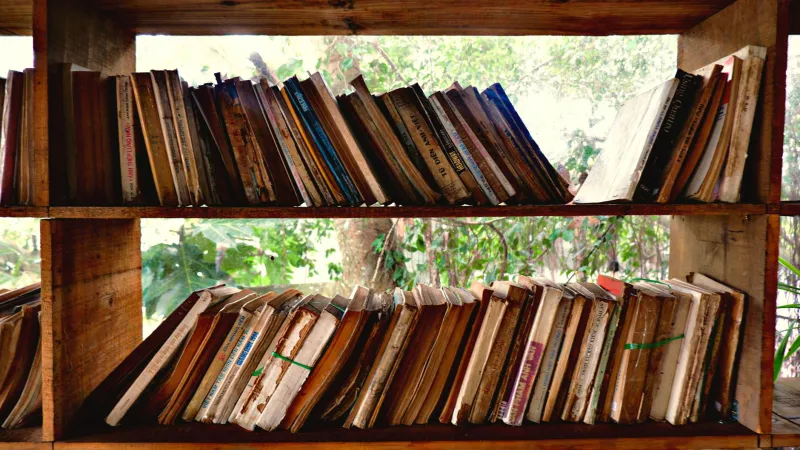
There's a bookshelf in a lot of Southern homes that doesn't get talked about much in literary circles. It's not stacked with Faulkner or Flannery O'Connor — at least not at first. It holds a worn King James Bible, maybe a devotional or two, a Sunday school workbook with a child's crayon scrawl in the margins, and a few inspirational titles your grandmother pressed into your hands like they were survival gear. That shelf, humble as it looks, might be the most formative reading space in American literary history.
The American South and parts of the Midwest — the region we loosely call the Bible Belt — developed a reading culture rooted not in bookstores or public libraries, but in churches, revival tents, and kitchen tables where scripture got read aloud every single morning. That tradition did something no English class could fully replicate: it taught millions of people to sit with language, to wrestle with it, to take it personally.
The Original Close Reading
Before anyone in academia coined the term "close reading," Southern Baptist Sunday school teachers were doing it every week. You didn't just hear a verse — you unpacked it. What does this word mean? Why did the author choose this image? What is the moral weight of this moment? These are the exact questions that literary scholars spend careers teaching college students to ask.
For kids growing up in faith-heavy households across Alabama, Mississippi, Tennessee, and rural Ohio, this kind of deep textual engagement was just Tuesday. The Bible is not an easy read. It's dense with metaphor, poetry, genealogy, prophecy, and narrative contradiction. Readers who grew up with it didn't just absorb stories — they learned to hold complexity, to tolerate ambiguity, and to find meaning in language that doesn't always give itself up easily.
That's a remarkable foundation for a literary life.
Devotional Literature and the Art of the Personal Essay
Beyond scripture itself, the devotional publishing industry — think Our Daily Bread, Jesus Calling, Max Lucado, Beth Moore — put a specific kind of writing into millions of American hands. Devotional literature is intimate. It speaks directly to the reader. It uses the second person, draws on concrete personal experience, and asks the reader to apply what they've just read to their own life before they even set the book down.
Sound familiar? That's basically the architecture of the personal essay. It's Montaigne. It's James Baldwin. It's the form that contemporary literary nonfiction lives and breathes in.
Readers who cut their teeth on devotionals didn't know they were learning essay structure — but they were. They were learning that a piece of writing could be both intimate and universal, both personal testimony and broader truth. When those same readers eventually picked up Mary Oliver or David Sedaris or Kiese Laymon, something clicked. The form felt known, even if the content was wildly different.
The Unlikely Pipeline to Literary Fiction
Here's the part that surprises people: the Bible Belt produced some of the most adventurous readers in America, precisely because they were trained so early to take reading seriously.
Flannery O'Connor, one of the most uncompromising voices in American fiction, was a devout Catholic in the Protestant South. She once wrote that for a region that was Christ-haunted rather than Christ-centered, the grotesque was the natural literary mode. Her characters are violent, broken, and relentlessly searching — and she built them from the same theological bones that filled the bookshelves around her.
Cormac McCarthy, raised Catholic in Tennessee, writes prose that reads like scripture translated into catastrophe. His sentences have the weight of Ecclesiastes. His moral universe is Old Testament in its severity. You don't get Blood Meridian without a deep, early immersion in the language of the sacred.
And then there are the readers — not just the famous writers, but the regular people. Librarians in Georgia who will hand you Toni Morrison and Marilynne Robinson in the same breath. High school teachers in Kentucky who assign Beloved alongside the Book of Job and dare you to find the difference in the emotional register. Book clubs in small Tennessee towns where women who've read the Bible cover to cover three times are now tearing through literary fiction with the same ferocity.
Modern Voices on a Faith-Shaped Literary Life
Contemporary Southern writers talk about this inheritance more openly than ever. Jesmyn Ward, the two-time National Book Award winner from DeLisle, Mississippi, has spoken about growing up in a deeply religious household and how the language of the church shaped her sense of rhythm and weight in prose. Her novels carry an almost liturgical quality — grief and grace braided together in sentences that feel like they were meant to be read aloud.
Brittney Cooper, scholar and author of Eloquent Rage, has written about the way Black Southern churches specifically created a culture of oratory and textual engagement that became an engine for intellectual ambition. The sermon, she argues, is a literary form — and growing up hearing great ones meant growing up understanding what language could do when it was working at full power.
Even writers who've moved far from the faith of their childhoods often point back to that early reading life as the origin of everything. The practice of sitting with a text, of believing that words matter and carry consequence, of reading something again and finding something new — that's not just religious training. That's the foundation of a reading life.
What That Shelf Was Really Teaching
The Bible Belt bookshelf — the one with the worn devotionals and the underlined verses — was doing something quietly radical. It was telling an entire generation that books matter. That stories have moral stakes. That language is worth your full attention.
When those same readers eventually reached for Zora Neale Hurston or Larry Brown or Ron Rash, they didn't need to be convinced that fiction could hold truth. They already believed it. They'd been trained to believe it since they were old enough to sit still in a pew.
That's not a small thing. That's a reading culture. And it's one that the literary world doesn't talk about nearly enough.
So the next time someone hands you a list of the most well-read regions in America, look a little closer at what's on the shelves. Not just the literary fiction. The whole shelf. Because sometimes the books that build the biggest readers aren't the ones you'd expect to find there.