More Than Shelves: The Independent Bookstores That Accidentally Rewrote American Literature
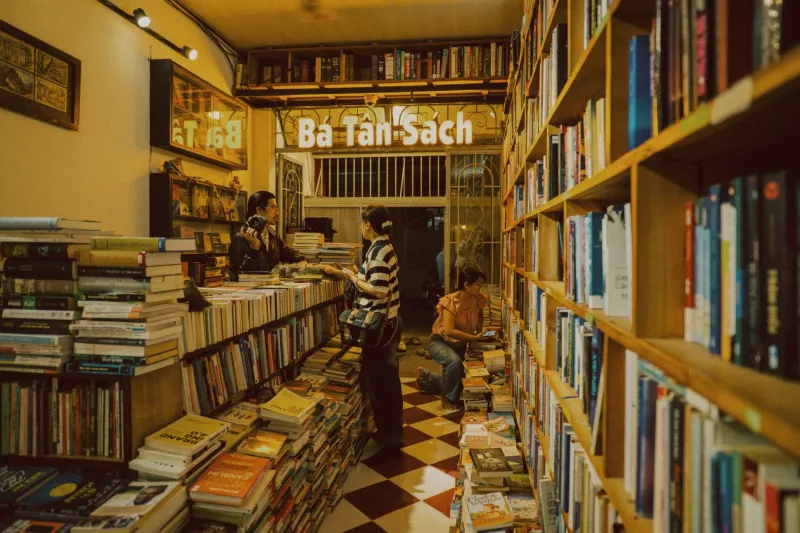
There's a version of bookstore history that's purely transactional — a customer walks in, hands over money, walks out with a bag. That's fine. That happens millions of times a day. But every so often, a bookstore becomes something else entirely. It becomes a pressure cooker, a gathering point, a place where the right writer meets the right reader meets the right argument at the right hour of the night, and something new gets born.
These aren't mythologized accidents. They're patterns. And when you trace them, a few names keep surfacing — stores that didn't just participate in American literary culture but actively bent it in new directions.
City Lights, San Francisco: Where the Beats Found Their Pulpit
Lawrence Ferlinghetti opened City Lights in 1953 on Columbus Avenue in North Beach, and it wasn't just the first all-paperback bookstore in the United States — it was a declaration. The place had opinions. It had a publishing arm. It had Ferlinghetti himself, who had the instinct to recognize Allen Ginsberg's "Howl" as something seismic before most of the literary establishment had even heard the name.
When Ferlinghetti published "Howl and Other Poems" in 1956 and was subsequently arrested on obscenity charges, the trial turned City Lights into a symbol. Suddenly, a bookstore in San Francisco was the front line of a free speech battle that newspapers across the country were covering. Writers who had been circling the fringes of the Beat movement now had a physical address to point to. The store became a magnet — for Kerouac, Corso, Ginsberg, and the whole restless cohort that was about to rewrite the rules of American poetry and prose.
What Ferlinghetti understood, maybe better than anyone at the time, was that a bookstore could function as an editorial act. The books you chose to carry, the ones you chose to publish, the conversations you allowed to happen on your floor — all of it was a form of argument about what literature should be doing in the world.
Prairie Lights, Iowa City: The Bookstore That Understood the Assignment
Iowa City is a small town with an outsized literary reputation, and a lot of that reputation runs directly through Prairie Lights. Opened in 1978 by Jim Harris, the store planted itself in a city that was already home to the Iowa Writers' Workshop — arguably the most influential creative writing program in American history — and decided to take that relationship seriously.
Prairie Lights didn't just benefit from the Workshop's proximity. It became part of the Workshop's ecosystem. Readings there weren't afterthoughts; they were events. Writers who came through Iowa City — whether as students, faculty, or visiting names — made Prairie Lights a stop because the store treated literary culture like it mattered, which, in a college town that could have easily coasted on textbook sales, was a real choice.
The store's reading series became a kind of ongoing conversation between writers and readers that ran parallel to the formal academic world next door. It was looser, more immediate, and often more honest. Writers tested ideas there. Audiences pushed back. Books got sold, sure, but more importantly, books got argued about — which is a different and richer thing entirely.
Politics and Prose, Washington D.C.: Power Meets the Page
Opened in 1984 by Carla Cohen and Barbara Meade, Politics and Prose occupies a particular niche that most bookstores don't even try for: it sits in a city defined by power and has consistently insisted that books matter to how that power gets used.
The store's events calendar over the decades reads like a who's-who of American intellectual and political life. Presidents, senators, historians, novelists, memoirists — they've all come through the Connecticut Avenue location because Politics and Prose built a reputation as a place where serious conversations happen. It's a bookstore that understood its audience wasn't just readers but people who shaped policy, argued cases, wrote legislation, and reported on all of it.
That positioning wasn't accidental. Cohen and Meade built a curatorial voice that the store has maintained through ownership changes and expansions. The message has always been consistent: reading isn't passive entertainment. It's how you think more clearly about the world you're actually living in.
Tattered Cover, Denver: The Store That Fought for the Right to Stay Quiet
In 1994, Denver police subpoenaed Tattered Cover owner Joyce Meskis for the purchase records of a customer suspected of drug manufacturing. Meskis refused. She took the fight to the Colorado Supreme Court and won, establishing a landmark precedent for reader privacy that still echoes in bookstore and library policy today.
That fight said something important about what Tattered Cover believed itself to be. It wasn't just a retailer. It was a space where what you read was your own business — a principle that sounds obvious until someone with a badge asks you to hand over the list.
The store, which Joyce Meskis had built from a single location into a Denver institution since taking over in 1974, had always operated on the idea that readers deserved to be trusted. The legal battle crystallized that value and made Tattered Cover a national story — not because of a famous author or a controversial book, but because of what the store was willing to defend about the act of reading itself.
What These Places Actually Had in Common
Look across these stores and a pattern emerges that has nothing to do with square footage or inventory systems. Each one had a point of view. Each one made choices — about what to carry, what to publish, what conversations to host, what fights to pick — that were rooted in a genuine belief that literature was doing something important in the world.
They also had people. Ferlinghetti. Harris. Cohen and Meade. Meskis. Booksellers who were readers first, who understood that the job wasn't just to move product off shelves but to connect the right book with the right person at the right moment. That sounds simple. It is not simple. It requires taste, stubbornness, and a willingness to bet on writers and ideas before anyone else has validated them.
The independent bookstore that changes things isn't a passive space. It's an argument made in three dimensions — every shelf placement, every reading invitation, every refusal to stock something, every decision to champion a debut novel that the chains ignored. All of it adds up to a position.
And sometimes, that position turns out to be the one that history agrees with.
If you've got a local indie that's doing something like this in your corner of the country, take hold of what it's offering. These places don't last forever, and the conversations they make possible are genuinely irreplaceable.