Pen in Hand: How Writing in Your Books Might Be the Most Radical Thing You Do This Year
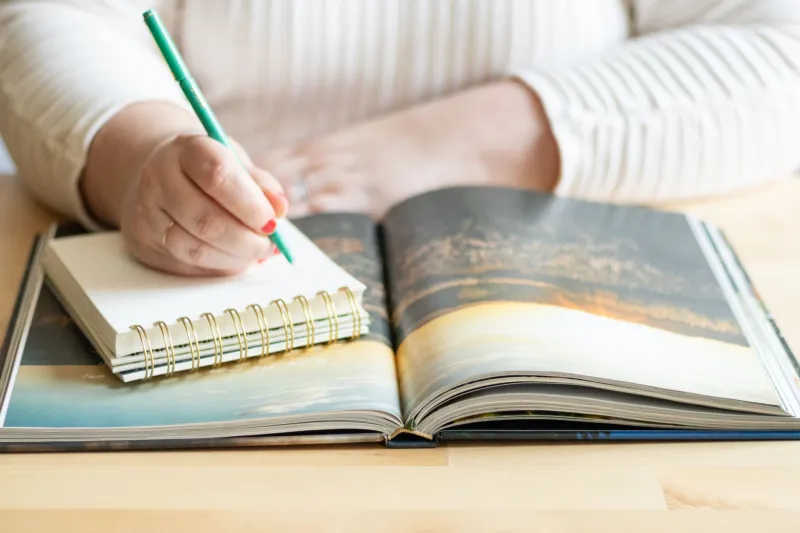
Somewhere between the second and third chapter of East of Eden, Renata Flores stopped reading and started arguing. She was thirty-four years old, sitting in her Phoenix apartment with a blue ballpoint pen she'd grabbed off the kitchen counter without thinking. By the time she finished the novel, its margins were dense with her own handwriting — questions, objections, small celebrations, a grocery list she'd abandoned midway through chapter nine.
"I felt like I was actually in the book," she says. "Not just watching it happen."
What Renata stumbled into has a name, a history, and — increasingly — a community. Marginalia, the practice of writing in the margins of books, is having a full-blown cultural moment. And the reasons why say a lot about how we read, why we've drifted away from it, and what we lose when we treat books like content to be consumed and discarded.
The Long, Complicated History of Writing in Books
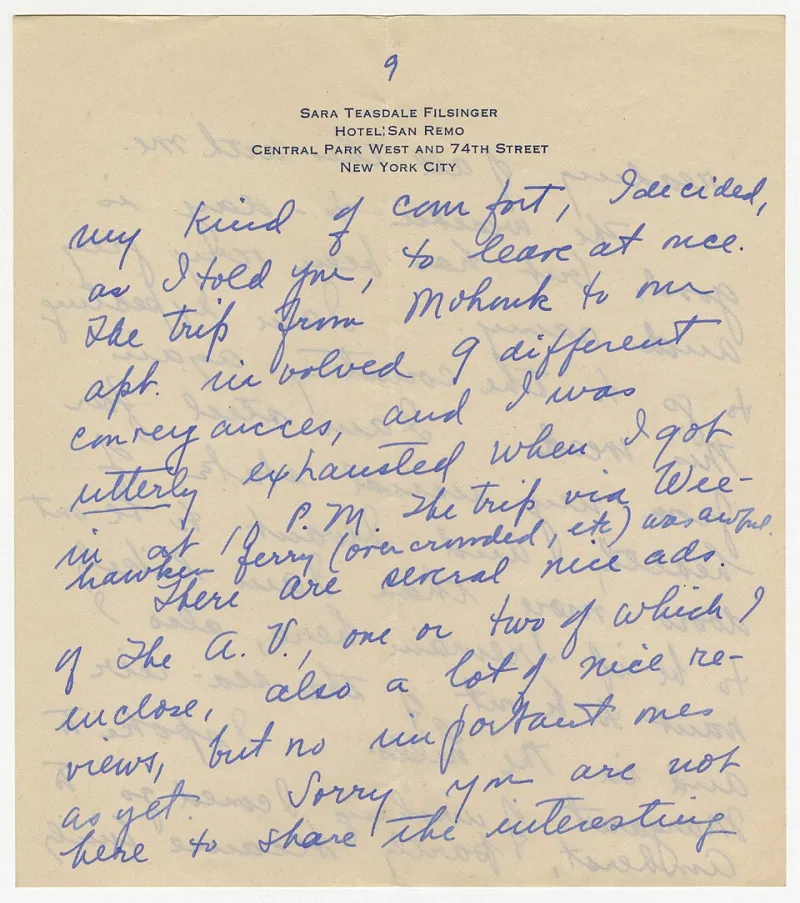
Marginalia is nothing new. John Adams filled his personal library with annotations so dense they practically constitute a second text. Mark Twain was notorious for it. Darwin scrawled questions and objections throughout the books that informed his thinking. Sylvia Plath's annotated copies have been studied by literary scholars for decades. For most of human history, writing in books wasn't considered vandalism — it was considered engagement.
Somewhere along the way, that changed. Library culture, the resale market, and a general reverence for the pristine object turned annotation into something almost transgressive. We were taught to treat books as sacred artifacts, not living conversations. The result, many readers now argue, was a slow drift toward passivity.
"There's a difference between reading and processing," says Dr. Mara Okonkwo, a cognitive neuroscientist at the University of Michigan who studies how physical engagement affects memory retention. "When you write something down — even a single word in a margin — you're forcing your brain to synthesize, to react, to form an opinion. That's a fundamentally different cognitive event than simply moving your eyes across a sentence."
Her research, along with a growing body of literature on what's sometimes called "generative learning," suggests that annotation doesn't just help you remember what you read. It changes what you understand.
Why Passive Reading Started to Feel Like a Problem
The rise of digital reading — ebooks, audiobooks, reading apps — brought with it a new kind of consumption. Swipe, tap, move on. Even for readers who stayed loyal to physical books, the habit of annotation had largely been trained out of them. You highlight on a Kindle, sure. But there's something different about holding a pen.
Michael Tan, who owns a used bookstore in Portland, Oregon called Bindery & Co., started noticing a shift around 2021. Customers were coming in specifically asking for annotated copies — previous owners' notes included. "People started seeing someone else's marginalia as a feature, not a flaw," he says. "They wanted to buy a book that had already been read hard."
That appetite for annotated books reflects something deeper: a hunger for evidence that reading is an active, human, even combative act. When you find a stranger's question scrawled next to a paragraph you've also questioned, you feel less alone in your confusion. When you find someone's exclamation point next to a line that moved you, the book doubles in meaning.
What Happens When You Actually Do It
For readers new to annotation, the first instinct is often paralysis. What if I mark the wrong thing? What if I change my mind?
That's exactly the point, says Flores, who now annotates every book she reads. "My copy of The Corrections has notes from when I was thirty-four and notes from when I was thirty-nine. They don't agree with each other. That's the whole story."
Annotation advocates suggest starting small: underline one sentence per page that stops you. Write one word in the margin — even just "yes" or "huh?" — and see what happens. Over time, the practice builds into something richer. You start noticing patterns in what catches your attention. You start having opinions you didn't know you had.
Dr. Okonkwo recommends what she calls "reactive notation" — responding to the text emotionally before intellectually. "Don't try to write smart notes," she says. "Write honest ones. The brain retains what it feels."
The Bookstore Angle: A New Kind of Collector
The market has caught on. Annotated editions — academic, celebrity, and reader-curated — are now a genuine commercial category. Penguin Classics and other publishers have released editions featuring famous readers' notes. Independent booksellers are hosting "annotation nights" where readers bring their most heavily marked copies and share what they've written.
At a small shop in Nashville called The Turned Page, owner Dee Holloway started a program she calls "Pass It Forward," where readers donate their annotated books to a special shelf. "Some of those books have three or four readers' handwriting in them now," she says. "They're basically collaborative documents at this point."
The emotional weight of that is hard to overstate. A book that carries the marks of multiple readers becomes something more than a book. It becomes a record of minds meeting across time.
Taking Hold of the Page
There's something almost defiant about picking up a pen before you open a book. It says: I'm not here to be a passive recipient. I'm here to think alongside this, to push back, to be changed and to leave a mark of my own.
In an era of algorithmic reading lists, scroll-and-forget content, and the creeping sense that we're all just consuming rather than truly engaging, marginalia is a small act of reclamation. You're not just reading the book. You're making it yours.
Renata Flores has a shelf now — about forty annotated books, spines cracked, margins full. She calls it her thinking library. "If I ever lost everything else," she says, "I'd want those books. Because they're not just books anymore. They're me thinking out loud."
Go ahead. Uncap the pen. The page is waiting.