Stumbled Upon: The Unexpected Magic of Books That Find You Before You Find Them
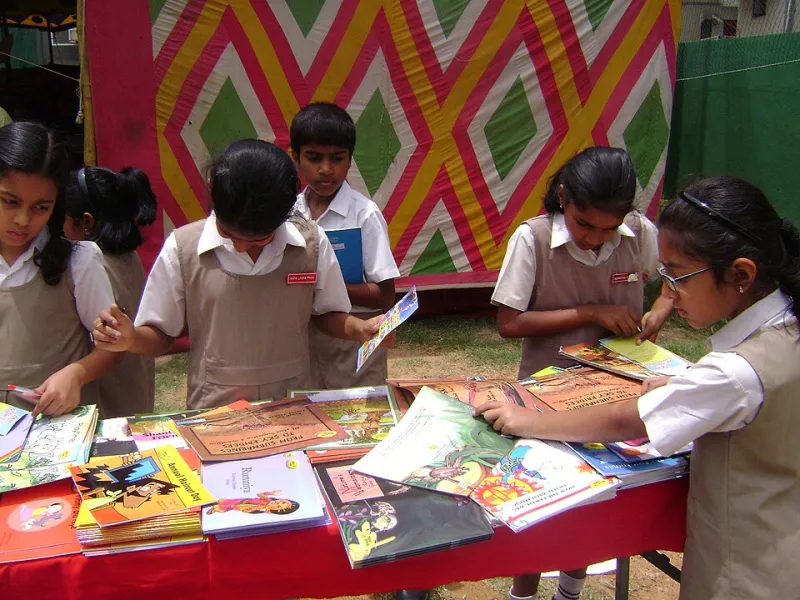
Photo: Pratham Books from India, CC BY 2.0, via Wikimedia Commons
There's a specific kind of reading memory that almost every devoted reader has tucked away somewhere. It's not the book a favorite blogger hyped for three weeks straight. It's not the one that dominated the bestseller list the summer you turned thirty. It's the one you picked up because the cover was facing out on the wrong shelf, or because someone on a bus left it on the seat next to you, or because your college roommate pressed it into your hands with zero explanation and just said, trust me.
That book — the one that arrived sideways, uninvited, and slightly mysterious — is almost always the one that wrecked you in the best possible way.
We live in an era of curated everything. Spotify knows your mood before you do. Netflix surfaces the exact thriller you didn't know you needed at 10 p.m. on a Wednesday. And yes, Goodreads and Amazon's recommendation engines are genuinely impressive at pointing readers toward books they're statistically likely to enjoy. But something gets lost when every discovery is engineered. Something quiet and irreplaceable.
The Algorithm Is Smart. It Just Doesn't Know You're Ready.
Here's the thing about algorithmic recommendations: they're built on your past. What you've read, what you've rated, what you've clicked on, what readers who look like you on paper have also enjoyed. They're backward-looking by design. And that's useful — until it isn't.
Because the books that genuinely change us often arrive at the precise moment we're ready for them, not the moment we're most predictable. A recommendation engine can't know that you just got out of a ten-year relationship and you're standing in a used bookstore in a city you don't live in, and the spine of a novel about solitude and reinvention is facing you at eye level for no particular reason. It can't account for the emotional weather of a Tuesday afternoon.
Psychologists who study meaning-making and what's sometimes called "narrative identity" — the story we tell ourselves about our own lives — suggest that chance experiences carry extra psychological weight precisely because they feel unearned. When something good happens to us randomly, we're more likely to pay attention to it, to hold onto it, to fold it into our personal mythology. A book you stumbled upon isn't just a book. It's evidence that the universe has decent taste.
Reader Stories: The Accidental Finds That Stuck
Ask any serious reader about their most meaningful books and you'll almost always hear a story about an accident.
A woman in Portland describes finding a water-damaged copy of Marilynne Robinson's Gilead in a Little Free Library during a walk she only took because her car wouldn't start. She'd heard of the book vaguely but never sought it out. She read it in two days. She's now read it four times.
A retired teacher in rural Georgia talks about a library sale where everything was a dollar a bag. He grabbed a novel he'd never heard of just to fill the bag, tossed it on his nightstand, and didn't pick it up for six months. When he finally did, he says it answered questions he hadn't known he was asking.
A college student in Chicago found a paperback tucked behind a radiator while moving into a new apartment. The previous tenant had left it. There was no name inside, no note. Just a book, waiting.
These aren't unusual stories. They're the norm for readers who've been at this long enough. The found book is practically its own genre of reading experience.
What Randomness Does That Curation Can't
There's a concept in creativity research called "beneficial constraint" — the idea that limitations and randomness can actually produce more interesting outcomes than total freedom. When you're not choosing from a personalized list of forty algorithmically sorted options, you're forced into a different relationship with a book. You didn't select it based on genre preferences or star ratings. You're going in without armor.
That vulnerability changes the reading experience. You're more open. You're not measuring the book against your expectations because you didn't really have any. You're not waiting for it to live up to the hype. It's just you and the pages and whatever happens next.
Browsing a physical bookstore — especially an independent one, especially a used one — creates conditions for this kind of discovery that no digital interface has managed to fully replicate. The physical act of wandering, of pulling a book off a shelf because the title is strange or the spine color catches your eye, introduces a productive friction that algorithms are specifically designed to eliminate. The algorithm smooths your path. The bookstore gives you a maze.
How to Court the Serendipitous Read
If you want more of these magical accidents in your reading life, you have to make space for them. That sounds counterintuitive — scheduling spontaneity — but it's less about manufacturing chance and more about lowering the walls that keep it out.
Some practical ways readers have found success with this:
Wander without a list. Go to a bookstore or library with no agenda. Give yourself thirty minutes and no phone. See what pulls at you.
Say yes to recommendations from strangers. If someone at a dinner party or a coffee shop mentions a book with genuine enthusiasm, write it down. Not because you're obligated to love it, but because their passion for it is itself a kind of data about the human experience.
Participate in blind book swaps. These are increasingly popular at indie bookstores and community events — you bring a wrapped book, you take a wrapped book, and you don't know what you're getting until you get home.
Let your library surprise you. Grab something from a display shelf you'd normally walk past. Pick up whatever's been returned to the cart that day. Let the library's circulation patterns become your recommendation engine.
The Book That Was Waiting for You
There's a beautiful idea that some readers hold loosely — not as literal belief, but as useful metaphor — that certain books are waiting for certain people. That the timing of a discovery isn't always accidental, even when it looks like it is.
Whether or not you buy into that kind of thinking, the emotional reality it points to is real: some books arrive in your life at a moment when you are uniquely able to receive them, and the encounter becomes something more than just reading. It becomes a marker. A before-and-after.
Algorithms are getting better every year. They'll keep getting better. But they can't replicate the feeling of reaching for a book on a shelf you almost didn't visit, in a store you almost didn't enter, on a day you almost stayed home — and finding something that feels, against all odds, like it was addressed to you.
Take hold of that book. It found you for a reason.